
Most people about to book their first panchakarma have the same private worry: I have no idea what I have actually signed up for.
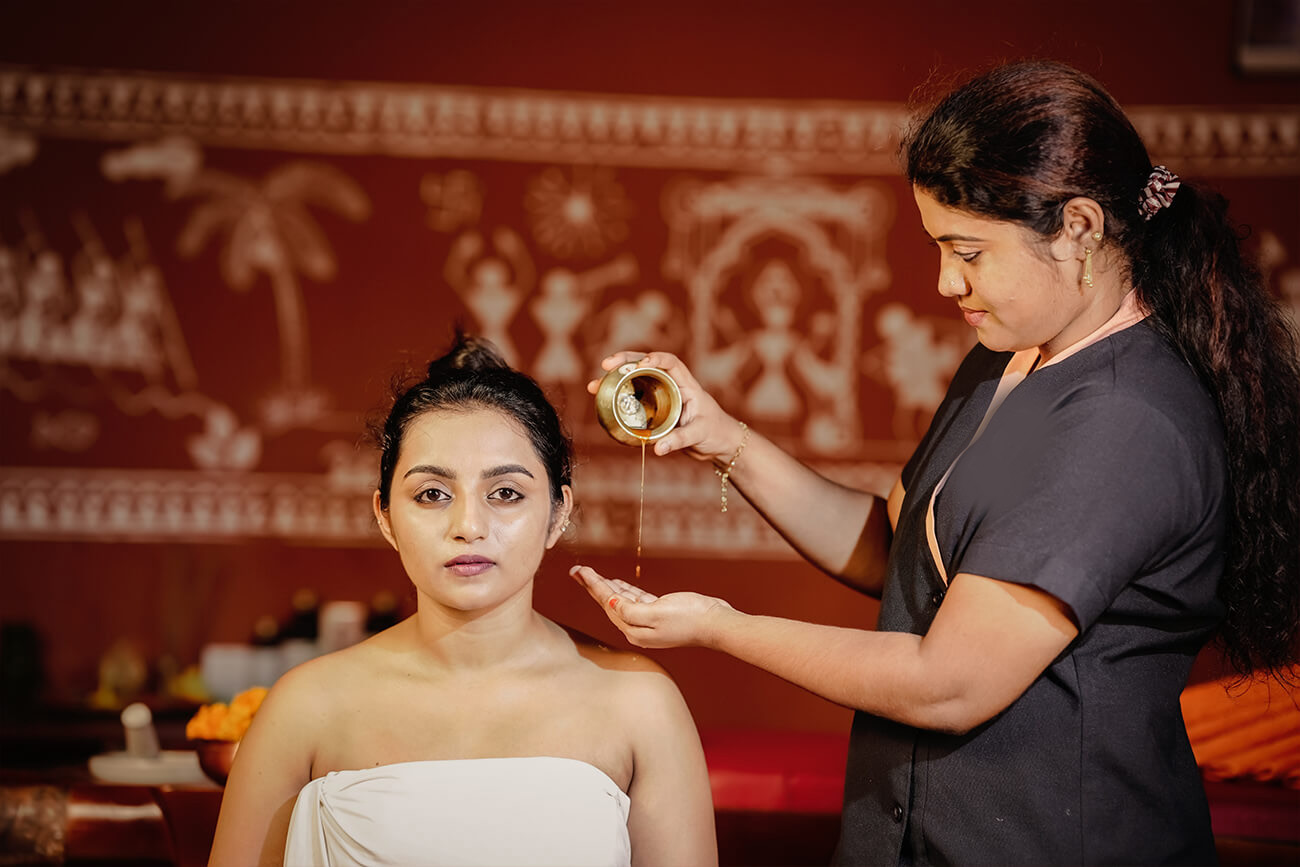
Resort websites do not help much. They show a woman having oil poured on her forehead and use words like “rejuvenation” and “bliss.” Nobody explains what happens on day five, why you might feel worse before you feel better, or whether you will be able to work.
Here is the honest version.
First, what panchakarma actually is
Panchakarma means “five actions.” It is not a massage package. It is a medical detoxification procedure with three distinct phases:
- Purvakarma — preparation. Loosening and mobilising accumulated toxins (ama) from the deep tissues into the digestive tract.
- Pradhanakarma — the main procedures. Eliminating those toxins through one or more of five routes.
- Paschatkarma — rebuilding. Restoring digestive fire, rebuilding tissue, re-establishing routine.
The five main actions are vamana (therapeutic emesis), virechana (purgation), vasthi (medicated enema), nasya (nasal administration of herbal oils) and raktamokshana (bloodletting). You will not receive all five. A physician selects based on your constitution and your imbalance — most people receive one or two as the main procedure.
This is the reason 3-day panchakarma does not exist. The preparation alone takes days.
Day 0 — Arrival and consultation
You arrive, and before anything else there is a consultation.
The doctor takes your pulse (nadi pariksha), examines your tongue, eyes, skin and abdomen, and asks about digestion, sleep, energy, bowel habits, menstrual cycle, stress and medical history. Bring any recent blood work — it is genuinely useful.
From this the physician establishes two things: your prakriti, the constitution you were born with, and your vikriti, what is out of balance right now. Everything that follows is built on this.
At Akanta Ayurveda & Yoga Cherai, prakriti analysis happens on day one before any therapy is scheduled, and the treatment plan is written by the doctor afterwards — not selected from a menu in advance.
Expect this consultation to take proper time. If it takes ten minutes, that is a warning sign.
Days 1–3: Purvakarma — The preparation phase
This is the gentlest and most pleasant part of the programme, which lulls people into a false sense of what is coming.
- Snehapanam — you drink medicated ghee on an empty stomach each morning, in an increasing dose. It tastes exactly as unpleasant as it sounds. Its purpose is to saturate the tissues so that fat-soluble toxins release into circulation. The doctor monitors your response daily and decides when you have had enough.
- Abhyangam — full-body warm medicated oil massage, usually performed by two therapists working in synchrony. Deeply relaxing, and clinically it drives the oil into the tissues.
- Swedana — herbal steam immediately after the massage, opening channels so the mobilised toxins move toward the digestive tract.
You may also receive udhwarthanam (a dry herbal powder massage, used particularly in weight and metabolic programmes) or kizhi — warm herbal boluses applied to the body. There are several types, including patrapottali swedam made with medicinal leaves and jambeera pinda swedam made with lemon, chosen by condition.
How you will feel: sleepy, heavy, a bit dull. Ghee-drinking days often bring mild nausea or an oily aftertaste. Appetite drops. This is expected.
Days 4–8: Pradhanakarma —
The main procedures
This is the phase people are anxious about, so here is what actually happens.
Virechana (therapeutic purgation) is the most commonly prescribed for the majority of constitutions. A herbal purgative is given in the morning and the body clears through the intestines over the following hours. You stay in your room, with staff and doctor checking on you. It is not painful. It is simply a day when you do not go anywhere.
Vasthi (medicated enema) is considered the single most important procedure in Ayurveda, particularly for vata conditions — joint pain, back pain, sciatica, neurological conditions, anxiety. It is given as a course over several days, alternating oil-based and decoction-based preparations. It is quick and far less unpleasant than people fear.
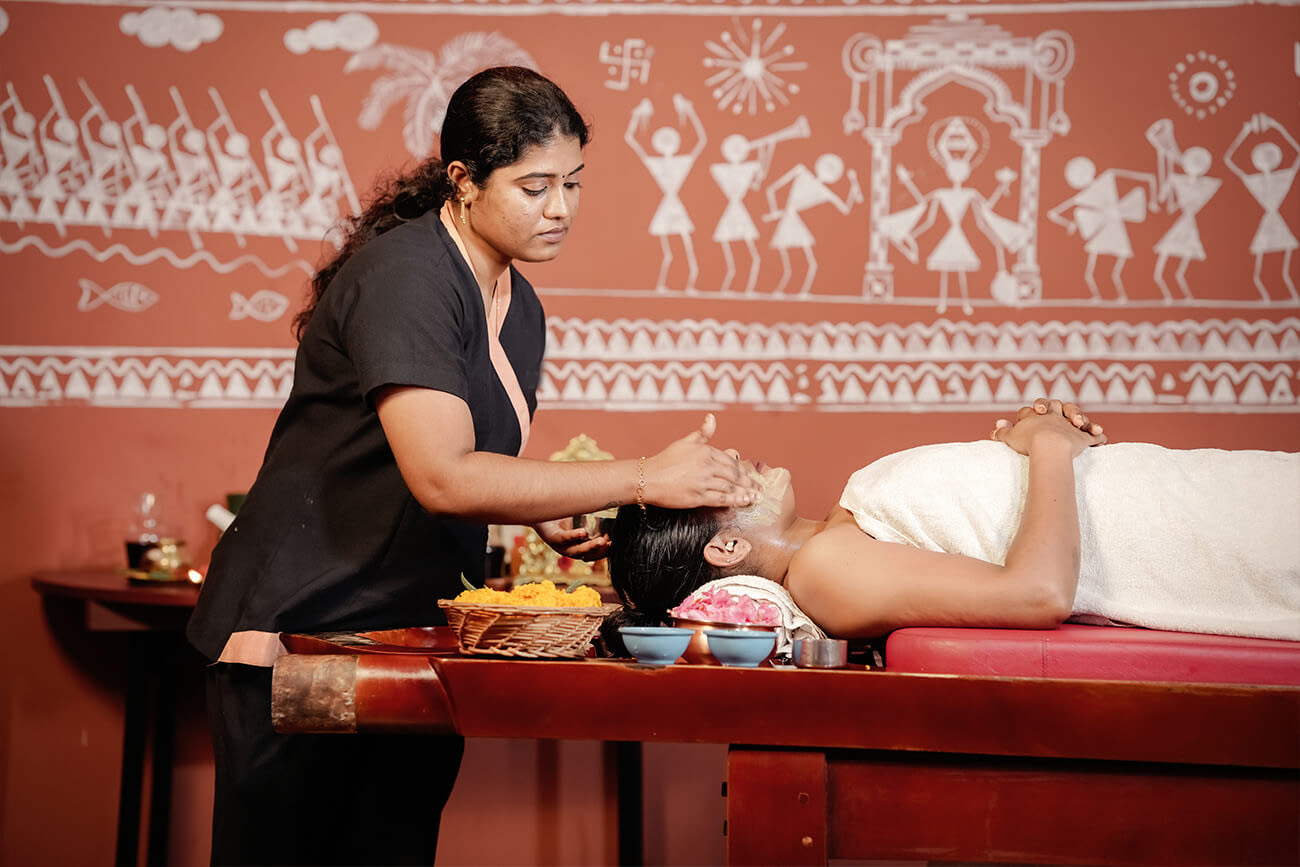
Nasya — medicated oil administered through the nostrils after a face, head and shoulder massage. Used for sinus problems, headaches, cervical issues and mental clarity. Expect an intense sensation for a few seconds and a lot of drainage afterwards.
Vamana (therapeutic emesis) is prescribed less often — mainly for kapha-dominant conditions such as chronic respiratory problems. If it is not indicated for you, you will not receive it.
Alongside these you may receive pizhichil (a continuous stream of warm medicated oil poured over the whole body — one of the classic Kerala treatments), shirodhara (a steady stream of oil over the forehead, used for anxiety, insomnia and stress), kativasthi (warm oil retained in a dough ring over the lower back for disc and back problems), or sashtika shali pinda sweda (njavarakizhi), where boluses of medicinal rice cooked in milk and herbs are applied to nourish and strengthen tissue.
How you will feel: days four to six are the hard ones. Fatigue, headaches, emotional volatility, disturbed sleep, sometimes old symptoms briefly returning. This is normal and temporary. Tell your doctor about all of it — this is exactly what the daily consultation is for.
Days 9–14: Paschatkarma — Rebuilding
The tone changes completely. Energy returns, and it returns noticeably.
The focus shifts to restoring agni (digestive fire) through a carefully graded diet, rebuilding tissue with rasayana (rejuvenative preparations), and re-establishing daily routine. Treatments become nourishing rather than eliminative — gentle abhyangam, njavarakizhi, shirodhara.
Yoga and pranayama become more central here. At Akanta these run twice daily on the rooftop as part of the structured programme — 7:00 to 8:00 in the morning and 6:00 to 6:30 in the evening, followed by a sunset walk.
This phase is where the results consolidate. People who leave early to save a few days routinely lose much of the benefit.
What you eat, phase by phase
- Preparation: light, warm, simple. Rice gruel, moong dal, cooked vegetables. Nothing cold, nothing raw.
- Main procedures: progressively lighter. On procedure days, often only thin gruel.
- Rebuilding: systematically reintroduced over several days, from liquid to soft to normal — a graded sequence designed to rekindle digestion without overwhelming it.
Throughout, meals are matched to your dosha. Akanta’s kitchen prepares food by individual dosha type using locally sourced organic ingredients, with herbal juice at 11:00 AM and herbal tea at 4:00 PM built into the day. No coffee, no alcohol, no meat, no cold drinks, dinner before 7:30 PM.
The Daily Rhythm
A treatment day at Akanta looks like this:
| Time | Activity |
|---|---|
| 6:00 – 7:00 AM | Dinacharya — cleansing of the sense organs |
| 7:00 – 8:00 AM | Yoga and meditation (rooftop) |
| 8:00 – 8:30 AM | Breakfast |
| 9:30 AM onwards | Morning treatment session |
| 11:00 – 11:30 AM | Herbal juice |
| 1:00 – 1:30 PM | Lunch |
| 2:30 PM onwards | Afternoon treatment session |
| 4:00 – 4:30 PM | Herbal tea |
| 6:00 – 6:30 PM | Yoga and meditation (rooftop) |
| 6:30 – 7:00 PM | Sunset walk |
| 7:00 – 7:30 PM | Dinner |
Two treatment sessions daily. Early nights. No exceptions.
What to Bring — And What To Leave Behind
Bring: old, dark, loose cotton clothes you will not mind ruining, because medicated oil does not wash out. Loose clothing for yoga. A book. Any recent medical reports. A refillable water bottle. Sandals.
Leave behind: the expectation of sightseeing. Alcohol. Work deadlines. New white clothing. Plans for day trips during the main procedure days.
On working during treatment: a light email load in the rebuilding phase is manageable. Trying to work through days four to eight is not, and it undermines the entire point.
What It Actually Costs
Genuine doctor-supervised residential panchakarma in Kerala is not a budget product, and the figure that matters is the all-inclusive one.
At Akanta, rates cover accommodation, treatments, yoga and all meals in a single daily figure, and the same figure applies whichever room category you are in — there is no separate Standard or Deluxe programme price:
| Season | Single occupancy | Double occupancy |
|---|---|---|
| May – September | €145 / ?13,000 per day | €240 / ?24,000 per day |
| October – April | €155 / ?16,000 per day | €260 / ?27,000 per day |
Worked through for the common programme lengths, single occupancy:
| Length | May – September | October – April |
|---|---|---|
| 7 days | €1,015 / ?91,000 | €1,085 / ?1,12,000 |
| 14 days | €2,030 / ?1,82,000 | €2,170 / ?2,24,000 |
| 21 days | €3,045 / ?2,73,000 | €3,255 / ?3,36,000 |
| 28 days | €4,060 / ?3,64,000 | €4,340 / ?4,48,000 |
Note that the cheaper window, May to September, contains Karkidakam — the monsoon month the Ayurvedic tradition regards as the best time of year for panchakarma. Lower rates and the optimal season happen to coincide.
Two warnings that apply anywhere you book. Anything advertised very cheaply is almost certainly massage, not panchakarma. And always confirm what is included — at many properties medicines, consultations and individual therapies are billed on top of the room rate, which can add a great deal to the final invoice.
Ask for a written, itemised inclusion list before you pay.
What Happens When You Get Home
The first two weeks back are the ones that decide whether it lasted.
Your doctor will send you home with dietary guidance, medicines to continue, and lifestyle instructions. The digestive system is freshly rebuilt and still delicate — going straight back to late nights, alcohol and heavy food undoes a great deal.
Most people report the clearest benefits at four to six weeks, not on the final day. Better sleep and digestion tend to come first; energy and joint or skin improvements follow.
Is 14 Days Enough?
For most people, yes — 14 days is the realistic minimum for a complete cycle with all three phases properly done.
Seven days is enough for rejuvenation and rest, and is the minimum stay recommended for any panchakarma programme, but it is not a full detox cycle. Twenty-one or twenty-eight days is what chronic conditions genuinely need. Akanta’s wellness programmes are structured at 7, 14, 21 and 28 days for exactly this reason, and which one you need is a clinical decision, not a budget one.
If you are weighing up which length is right for your situation, describe your condition to the team on WhatsApp at +91 99476 15551 and ask the doctor’s opinion before booking. A centre worth choosing will sometimes tell you that you need less than you were about to buy.
Information provided here is for general awareness only. Treatment is prescribed solely after individual consultation with a qualified Ayurvedic physician. Please consult your doctor before starting any programme or discontinuing existing medication.